 Estonia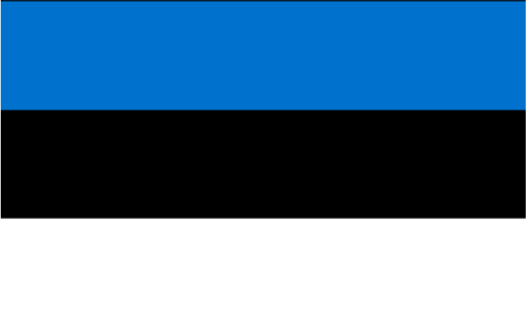
 |
Area: 45336 km2 |
 |
Population: 1365884 |
 |
GDP at current prices (M EUR): 36011.1 |
| GDP per capita at current prices (EUR): 30700 | |
| % of National GDP: No information available. | |
 |
% of Unemployment: 5.6% |
 |
Regional GERD (%): 1.75% |
Science, technology and innovation (STI) policy in Estonia is solely implemented at national level. The STI field is regulated by the Organisation of Research and Development Act (‘Teadus- ja arendustegevuse korralduse seadus’). The highest governing body for the policy is the Research and Development Council (‘Teadus- ja Arendusnõukogu’), which is led by the Prime Minister and involves 14 other members (ministers, public and private sector representatives). There are two main responsible ministries for STI policy in Estonia: the Ministry of Education and Research (MoER) and the Ministry of Economic Affairs and Communications (MoEC). The Ministry of Regional Affairs and Agriculture and the Ministry of Climate (MoC) are playing an increasing role in STI. The Estonian Research Council (‘Eesti Teadusagentuur - ETAg’) and the Entrepreneurship and Innovation Foundation (‘Ettevõtluse ja Innovatsiooni Sihtasutus - EAS and KredEx’) are the main policy implementing agencies. The EIF was created in 2022 by merging two former enterprise support agencies (EAS and KredEX) to strengthen the support structure of research and innovation in Estonia.
The Research, Development, Innovation and Entrepreneurship (RDIE) Strategy 2021-2035 is the key STI policy framework for Estonia. The strategy was approved by the Research and Development Council (RDC) and the Parliament (‘Riigikogu’). The RDIE Strategy has a joint steering committee (‘TAIE juhtkomisjon’) consisting of representatives from both ministries as well as key stakeholders. The Steering Committee has set up in place of the Research Policy Committee, Innovation Policy Committee and the Steering Committee for Smart Specialisation to implement the strategy. The responsibility of the strategy is divided equally between the MoER and the MoEC. The RDIE Strategy follows the UN sustainable development goals: 4, 7, 8, 9, 11, 12, 13 and 17. The most significant priorities of the RDIE strategy are to: 1) Address society’s development needs; 2) increase efficiency and impact of science and researchers; and 3) Make business more RDI-intensive. The RDIE Strategy development processes was led by two ministries – the Ministry of Education and Research and the Ministry of Economic Affairs and Communications - and was approved by the Research and Development Council (RDC). The MoER and the MoEC started the road-mapping process of focus areas in 2021 including 21 joint events. Stakeholders from 15 R&D organisations and higher education institutions, 47 companies and representative organisations, 12 government institutions and their agencies and 23 other organisations were involved during the road-mapping. In total around 300 participants contributed. On 18th October 2022, a steering committee of the RDIE strategy consisting of members of the science and innovation policy commission approved the roadmaps, as well as the governance and monitoring model. Based on this approval, the two ministers - research and education and economic affairs and communications, confirmed it by ministerial orders.
For information on regional S3s, please return to the homepage: https://ec.europa.eu/regional_policy/assets/s3-observatory/index_en.html
| Name of strategy | Estonian Research and Development, Innovatio and Entrepreneurship Strategy 2021-2035 |
| Type of strategy | National |
| Languages | ET/EN |
| Strategy approved | Yes |
| Name | Position | Contact |
|---|---|---|
| No information available. | Ministry of Education and Research - Research and Development Policy Department | hm@hm.ee |
No information available.
 |
Aerospace & Defence ➝ | |
 |
Agri-food ➝ | |
 |
Construction ➝ | |
 |
Creative & Cultural Industries ➝ | |
 |
Digital ➝ | |
 |
Electronics ➝ | |
 |
Energy/Renewable Energy ➝ | |
 |
Energy Intensive Industries ➝ |
 |
Healthcare ➝ | |
 |
Mobility, Transport & Automotive ➝ | |
 |
Proximity Economy ➝ | |
 |
Retail ➝ | |
 |
Social Economy ➝ | |
 |
Textiles ➝ | |
|
Tourism ➝ |
These keywords, identified using AI and manually verified, highlight the key elements of each strategic priority as reflected in individual strategies.
These keywords, identified and associated through semantic AI algorithms and manually reviewed, support the search function by identifying topics related to each strategic priority. While a priority may not explicitly focus on these keywords, they provide meaningful connections. For exxample, agricultural terms might relate to circular economy priorities, such as biofuels or agricultural waste valorisation. Semantically associated keywords enable users to find regions with similar or related priorities, offering a starting point for deeper exploration of each specific strategy.
| Priority | Descriptive keywords | Semantic keywords |
|---|---|---|
| Digital solutions across all areas of life | Digital transformation, digitalisation, digital solutions, artificial intelligence, robotics, automation, regulatory reform | digital transformation, data and technology solutions, digital business model, intelligent systems and automation, smart home, automation and digital transformation, industrial automation |
| Health technologies and services | Biomedical technology, precision medicine, human-machine interactio, machine learning models, single health & access to digital services | health, health research and innovation, digital health, health informatics, digital transformation, |
| Valorisation of local resources | Regional development, cultural valorisation, knowledge circulation, economic resilience, language preservation, investment attractiveness, societal wellbeing | community and society, community engagement, quality of life, wellbeing |
| Smart and sustainable energy solutions | Smart energy solutions, sustainable energy, climate change, environmentally friendly technology, resource scarcity | circular economy, circular design, renewable energy, energy efficiency and smart energy, energy efficiency technology, digital transformation, intelligent systems and automation, smart energy system |
| Viable Estonian society, language, and cultural space | : | community and society, community engagement, tourism, heritage tourism, cultural heritage destination, cultural tourism, interactive cultural event, cultural & creative industries, cultural heritage, cultural tourism, heritage tourism |
| Economic classification (NACE section & division) | Scientific classification (NABS digit 1 & 2) | |
|---|---|---|
| Digital solutions across all areas of life |
|
|
| Health technologies and services |
|
|
| Valorisation of local resources |
|
|
| Smart and sustainable energy solutions |
|
|
| Viable Estonian society, language, and cultural space |
|
|
| Document type | Link |
|---|---|
| Webpage | Kohesio: Region/Member State |
| Webpage | Link to ERDF programmes database |
No information available.
No information available.
No information available.

 Industrial Modernisation